Pressure Cleaning Services in London

Pressure Cleaning Services in London provides exterior cleaning for hard-wearing surfaces that need a thorough, controlled wash rather than a light rinse. Our main work centres on pressure washing for drives, patios, paths, walls and similar outdoor areas, with a practical focus on removing built-up dirt, algae, moss and weather staining. For property owners who want a cleaner finish without replacing materials, this service can be a straightforward way to improve appearance and day-to-day upkeep.
We work across surface types that benefit from a careful approach, because not every outdoor area responds in the same way. Some paving can take a stronger wash, while other materials need a more measured method to avoid damage or joint loss. That is why the service is best understood as cleaning with judgement rather than simply adding more force. The aim is a clearer, more presentable result that still respects the condition of the surface.
If you are comparing options for a driveway, patio or path, start by identifying what needs cleaning, what the material is, and whether there are stubborn marks or delicate sections. A clear brief helps us suggest the most suitable approach. You can use the pages on this site to look at the different cleaning services, then request a quotation when you are ready.
Pressure Washing for Driveways, Paths and Entrances
Driveways and front access areas often collect a mix of tyre marks, mud, leaf residue and general surface dullness. Pressure washing can lift much of that day-to-day build-up from block paving, concrete and other robust finishes. Where joints, edging or adjoining materials need care, the cleaning method should stay controlled so the work improves the entrance without creating avoidable disruption. A good result usually depends on the right balance between water pressure, nozzle choice and the time spent on each section.
The same basic service can be adapted to different layouts. A straight drive may be quick to work through, while a sloped forecourt, a narrow side path or a surface bordered by planting may call for more careful handling. In practical terms, that means the cleaning plan should match the access, the finish and the amount of staining present. If you are weighing up whether a full wash is needed, think about the parts people see first and the sections that are most affected by traffic or shade.
For a simple start, review the relevant service pages and note the surfaces you want dealt with. Driveway cleaning is a useful place to begin if the main concern is vehicle access and general grime, while a broader pressure washing approach can suit mixed exterior cleaning needs. A brief description of the area and surface condition is usually enough to move the conversation on. Please ask for a quotation if you want the work priced against a specific surface or combination of surfaces.
Patio and Paving Cleaning for Cleaner Outdoor Living Areas

Patios, terrace spaces and paved seating areas tend to show dirt more quickly because they sit close to soil, planting, food use and everyday foot traffic. Pressure cleaning can refresh these surfaces by removing the loose debris and ingrained surface film that collect over time. The work is not only about appearance; a clearer patio is often easier to maintain because dirt and algae are less likely to hold moisture across the finish. Different paving materials, however, need different treatment, so the process should remain tailored rather than rushed.
Where a patio has decorative stone, older slabs or more delicate pointing, a careful wash matters as much as the final look. The intention is to clean the surface evenly while avoiding unnecessary wear. On some jobs, a lower-pressure rinse with more detailed attention around joints is more appropriate than a strong blast across the whole area. That kind of judgement is useful when a customer wants the patio to look brighter without losing the character of the material beneath it.
You may also want to compare patio-specific services with broader exterior cleaning. The page for patio cleaning is relevant when the focus is mainly on seating areas and paved garden spaces, while driveway and patio cleaners is helpful if several hard landscaping areas need attention together. A short note on what the surface is made from and how long it has been left will help shape the work. Keep the enquiry simple and ask for a quotation once you know the areas involved.
What the Cleaning Process Usually Covers
Exterior pressure cleaning is often a combination of preparation, washing and checking the finish afterwards. Loose debris may need to be swept away first so the wash can reach the surface properly. Then the cleaning itself can be carried out in stages, working from the least soiled sections to the most stubborn marks. That approach helps avoid spreading dirt across already cleaned areas and can make the result more even across the whole space.
Because outdoor cleaning jobs vary, a sensible brief should cover access, surface material and any areas that should not be treated in the same way as the rest. A customer may have adjacent gravel, planting, timber edging or decorative features that need care around the main wash. It is also sensible to mention slippery patches, loose slabs, damaged grout or previous repairs. Good information at the outset helps reduce guesswork and supports a better-fitting service plan, especially where surfaces are older or mixed.
If you would like to understand the available service categories, the services overview gives a broader picture of the main work areas, while pricing and quotes is the natural page to check when you are ready to discuss scope. You do not need a long description to begin; a short outline of the area and its condition is enough. For a straightforward start, just say what needs cleaning and request a quotation.
Decking, Timber and Other Hard-Working Outdoor Surfaces

Decking needs a different kind of attention from stone or concrete because timber surfaces can mark, swell or roughen if treated too aggressively. Pressure cleaning for decking should therefore be approached with restraint, using the right level of force and a finish-focused method. The aim is to remove dirt and surface growth while keeping the boards serviceable. Where boards are weathered or coated, the cleaning method may need adjusting to suit the condition of the timber and the result the owner wants.
Timber areas are not the only surfaces that benefit from a tailored wash. Steps, balustrade bases, side returns and other external features may need selective cleaning rather than full-surface treatment. In some cases, customers want the decking cleaned as part of a larger garden tidy-up, while in others they only need the walking surface improved before seasonal use. Either way, the work should respect the limits of the material and not rely on unnecessary force to compensate for poor technique.
For more detail on that kind of work, see decking cleaning if timber surfaces are the main focus, or decking services if the job is part of a wider outdoor maintenance plan. When you are ready, a short note on the area size, access and any visible staining will help us respond sensibly. We welcome quotation requests for straightforward single-surface jobs as well as mixed exterior cleaning.
Garden Areas, Boundaries and Supporting Maintenance
Although pressure cleaning is the core service here, many outdoor properties also need related maintenance work to make the cleaned space look complete. Garden edges, boundaries and adjoining features can affect how tidy a paved or hardstanding area appears. A clean patio beside overgrown borders, for example, may still look untidy if the surrounding space is left unmanaged. That is why customers often think about the cleaning as part of a wider exterior maintenance plan rather than as an isolated task.
Some properties benefit from linked services where the main wash is paired with lighter outdoor upkeep. This can include garden maintenance around paved sections, grass cutting near hard landscaping or the removal of unwanted growth that has encroached onto paths and walls. The exact combination matters, because not every customer needs the same scope. A careful discussion of what is included keeps the work focused and avoids unnecessary extras that do not support the main result.
Relevant service pages such as garden maintenance and garden services can help if your outdoor space needs attention beyond washing alone, while grass cutting may be useful where the surrounding lawn affects the overall finish. A brief note about the full area helps decide whether you need a single cleaning visit or a more joined-up package. If you are considering both cleaning and upkeep, ask for a quotation after you have checked the scope.
Surface Care, Access and Practical Quotation Details
Quotation requests are easier to assess when the surface type and work area are clearly described. A patio made from natural stone, for example, may call for a different method from a block-paved driveway or a concrete courtyard. Access also matters: some spaces are open and straightforward, while others sit behind side gates, narrow passages or garden furniture that may need moving before the cleaning begins. A concise summary is usually more useful than a long explanation.
It is also helpful to mention anything that could affect the finish, such as heavy staining, moss in joints, standing water, fragile edging or previous patch repairs. That information does not need to be technical; it simply gives a clearer picture of the work involved. In many cases, a few well-chosen details are enough for us to understand the likely method and identify whether the job is mainly a pressure wash, a lower-pressure clean or a combination of approaches. Clarity at the start supports a better quotation and a smoother schedule.
If you want to compare core washing services before making contact, jet wash and jet washing are relevant terms for pressure-based exterior cleaning, while pressure washing remains the broadest description of the main work. Once you have decided what needs attention, you can move ahead with a simple request. Request a quotation when you are ready.
About London
London is a large and historically layered capital shaped by the River Thames, a dense network of neighbourhoods and a long pattern of growth that can still be read in its streets, squares and transport routes. The City of London, Westminster and the wider metropolitan area developed over centuries through trade, governance, migration and rebuilding, giving the city a mix of medieval, Georgian, Victorian and modern architecture. The Thames remains one of its defining features, crossed by many bridges and edged by riverside paths, docks, embankments and renewed former industrial land. Landmarks such as the Tower of London, St Paul’s Cathedral, the Palace of Westminster and Trafalgar Square sit alongside parks, market streets, museums and civic buildings that reflect different eras of public life. Green spaces are also central to the city’s character, from Hyde Park and Regent’s Park to smaller commons, gardens and squares distributed across the boroughs. Areas like South Bank, Covent Garden, Greenwich and Camden each carry distinct identities shaped by culture, commerce, heritage and everyday use. London’s scale means that grand avenues, tightly packed terraces, post-war estates and newer developments can sit only minutes apart, while rail, Underground and river services link them into a single working metropolis. That combination of history, movement and variety gives the city a character that is at once familiar and constantly changing, with each district contributing its own streetscape, landmarks and local rhythm.
Related Exterior Cleaning and Wider Property Care
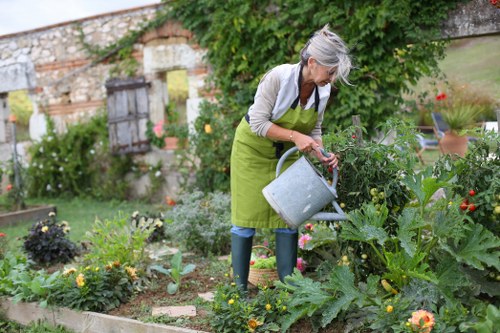
Some customers want to combine pressure cleaning with other exterior tasks that support the overall look and upkeep of a property. Gutter debris, for example, can affect the appearance of the roofline and may be discussed alongside ground-level washing where the property is being brought back into better order. The same can be true of walls, boundary surfaces and other outdoor features that collect dirt more slowly than patios or drives but still benefit from periodic attention. The aim is not to expand the scope without reason, but to make sure linked tasks are considered sensibly together.
When the frontage or garden is being reviewed as a whole, customers often compare a few different pages before deciding what to include. A careful choice can keep the work focused on the surfaces that matter most, rather than paying for attention in places that do not need it. That can be especially useful where a property has both hard landscaping and lighter maintenance needs. If the main concern is a cleaner hard surface, keep the brief centred on that and only add related tasks where they genuinely help the result.
Useful pages in that context include gutter cleaning if roofline debris is part of the wider plan, and garden clearance where overgrowth or clutter has become part of the same project. For broader property maintenance, the services overview can help you match the right pages to the work you have in mind. When you are ready, ask for a quotation and keep the scope clear and concise.
Choosing the Right Level of Cleaning
Not every exterior surface needs the same intensity of cleaning, and that is why the right level of treatment matters. A strong wash can be useful on some robust concrete or paving areas, but it may not suit softer stone, older pointing or timber. Choosing the correct method protects the surface while still aiming for a clear improvement. In practical terms, the best result often comes from a measured approach rather than a one-size-fits-all wash.
Customers sometimes compare what is visible on the day with what has built up over a longer period. Algae, traffic film and trapped dirt can make a surface look darker or patchier than it really is, while loose debris can hide the finish altogether. A good pressure cleaning service should address both appearance and condition, staying aware of what the surface can reasonably withstand. That is especially important where there are decorative details, transitions between materials or areas that are already worn.
For background on options and scope, the page for driveway and patio cleaning is useful if you want both main hard surfaces covered, while patio cleaners suits a more patio-led enquiry. If you are trying to decide between a single area and a broader set of outdoor surfaces, keep the first contact simple. A brief message and request for quotation is often the quickest way to narrow the options.
Getting Started with a Quote Request
Once you know which surface or surfaces need attention, the next step is to outline the job clearly enough for a sensible quotation. A small courtyard, a long driveway and a mixed patio-and-path project all involve different amounts of work, even if the same basic cleaning method is used. Describing the layout, the surface type and any difficult spots helps keep the quote aligned with the job rather than with guesswork. That is the simplest way to start.
If you are unsure how much detail to give, keep it practical: say what needs cleaning, where it is and whether there are any conditions that matter, such as moss, staining, restricted access or nearby materials that need care. There is no need to overcomplicate the request. A short, accurate description is usually enough to begin. We can then discuss whether the work is best treated as a straightforward pressure wash or as a more carefully managed clean with surface-specific handling.
When you are ready to move forward, use the relevant page for the work you want and request a quotation in plain terms. If you are comparing wider exterior options, you may also want to look at services overview and then choose the page that best matches your surface. The final step is simple: tell us what needs cleaning and ask for a quote.


